Q. Why should I choose IICRS for my Pharmacovigilance course?
IICRS offers a job-oriented and globally-aligned curriculum that provides hands-on training with industry-standard software like Oracle Argus and ArisGlobal. Our course is unique because it integrates core Pharmacovigilance with cutting-edge AI in Clinical Research, led by senior industry trainers with extensive experience. This holistic approach ensures our graduates are well-prepared for the demands of the global job market, including roles in India, USA, and Europe.
Q. Is IICRS the best institute for an online Pharmacovigilance course?
IICRS is a premier institute renowned for its job-oriented training and global standard curriculum. We are among the first to offer an online Pharmacovigilance course that includes an Advanced Diploma in AI in Clinical Research. Our dedication to providing a strong foundation with live projects, real software training, and robust placement support makes us a leading choice for a successful career in drug safety.
Q. Why is an online Pharmacovigilance course from IICRS better than a physical class?
An online Pharmacovigilance course from IICRS provides unparalleled flexibility and access to the best industry trainers worldwide, which is often limited in physical classes. Our e-learning platform includes live sessions, a 24/7 AI bot for doubt resolution, and the convenience of a global curriculum without travel constraints. This format is ideal for students and working professionals in India, the Middle East, and Africa.
Q. What makes the IICRS curriculum unique?
The IICRS curriculum stands out by combining a comprehensive Pharmacovigilance foundation with practical modules on AI, Machine Learning (ML), and Natural Language Processing (NLP). This unique integration prepares you for future industry trends, giving you a competitive edge in a global market that is increasingly dependent on advanced technologies for drug safety and data analysis.
Q. What is the IICRS approach to training?
Our training is built on a "Learn-Apply-Succeed" model. We go beyond theory by incorporating live projects and real software training, allowing you to apply your knowledge in a practical, real-world setting. This hands-on approach ensures you acquire not just knowledge but also the critical skills employers value, making you a confident and capable professional.
Q. Does IICRS have a high success rate for placements?
IICRS is committed to ensuring every student succeeds. We offer 100% placement support and have a strong network with leading pharmaceutical companies and CROs. Our robust pre-placement training includes interview preparation, resume building, and soft skills development, directly contributing to our high placement success rate across India and global locations.
Q. Do you offer an international internship?
Yes, our program includes an invaluable international internship certificate from a USA-based company. This remote internship provides hands-on experience and a global perspective, giving you a significant competitive advantage when applying for jobs in the USA, Europe, and other international markets.
Q. How is the IICRS faculty?
Our faculty comprises senior industry experts with over a decade of hands-on experience in Pharmacovigilance and Clinical Research. They bring real-world insights and best practices from leading pharmaceutical companies to the virtual classroom, ensuring you receive high-quality, relevant training that aligns with current industry demands.
Q. Are there special scholarships for students?
Yes, IICRS is dedicated to making quality education accessible. In addition to various payment plans, we offer special scholarships for students from India, Africa, and Southeast Asia. This initiative ensures that financial constraints do not become a barrier to pursuing a rewarding career in Pharmacovigilance and Clinical Research.
Q. How does IICRS ensure the course is job-oriented?
Our entire curriculum is designed with direct input from industry professionals to meet actual job requirements. We provide training on live projects and industry software like Oracle Argus, combined with a dedicated pre-placement training module. This focus on practical skills makes our graduates immediately valuable to employers globally.
Q. What is the duration of the Advanced Diploma in Pharmacovigilance with AI?
The online Advanced Diploma in Pharmacovigilance with AI is a comprehensive, six-month program. It includes over 500 hours of in-depth training, live sessions, hands-on projects, and dedicated support to ensure you gain a complete mastery of the subject.
Q. What is the course fee for the Advanced Diploma in Pharmacovigilance with AI?
The fee for the online Pharmacovigilance course is INR 65,000 for students in India, and USD 1000 for International students. This investment covers the comprehensive curriculum, software training, pre-placement support, and an international internship certificate, providing excellent value for a high-demand career.
Q. What is the eligibility for the Pharmacovigilance course?
This Pharmacovigilance course is ideal for graduates and post-graduates in Pharmacy, Medicine, Nursing, Life Sciences, and other related backgrounds. It is also well-suited for professionals looking to enhance their skills or make a career transition into the Clinical Research industry.
Q. What is the admission process?
The admission process is straightforward. Aspiring professionals can fill out a quick query form on our website to receive a free counseling session. Our dedicated admission officers will then guide you through the process, answer all your questions, and help you select the right Pharmacovigilance program to meet your career goals.
Q. What certificates will I receive upon completion?
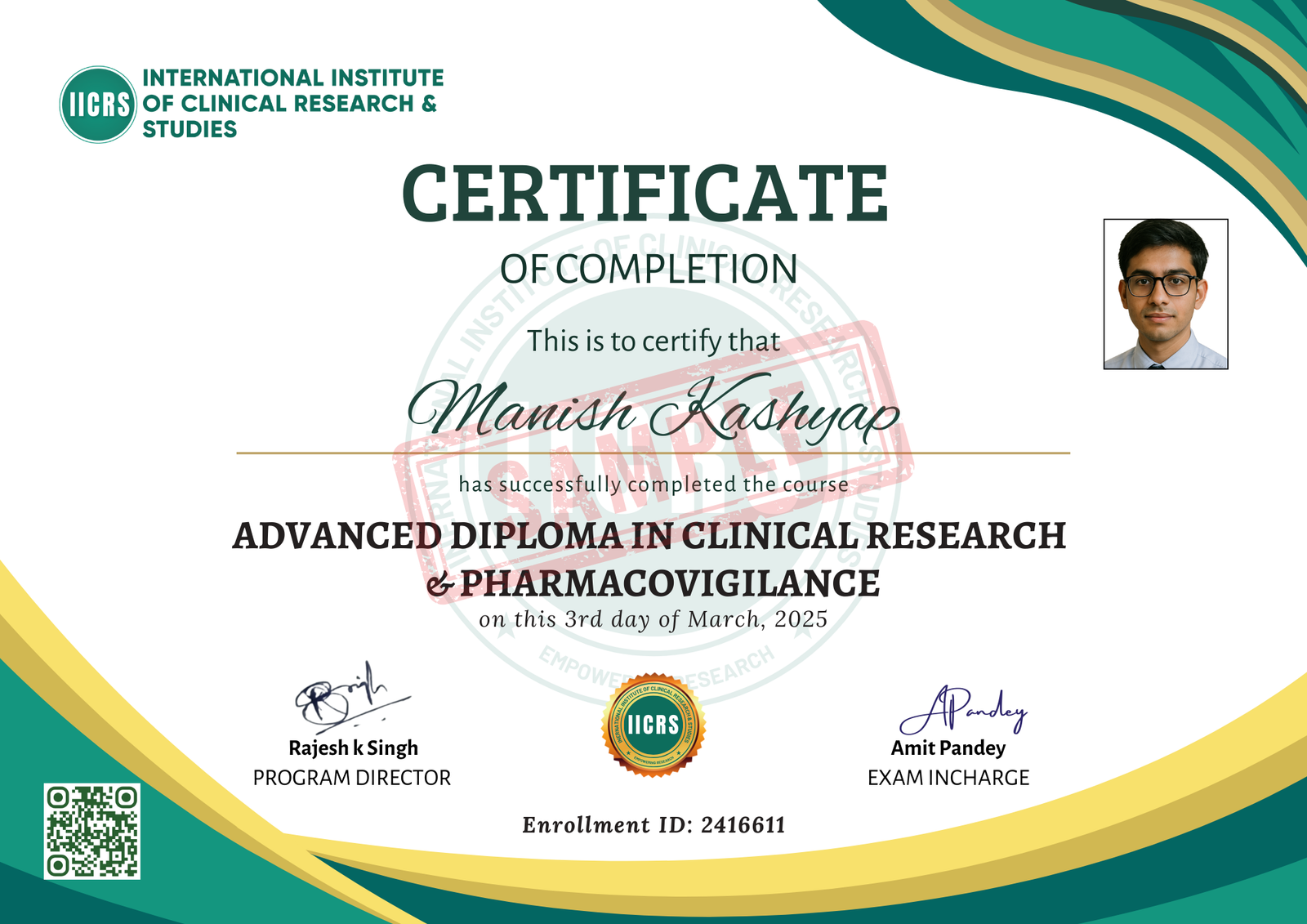
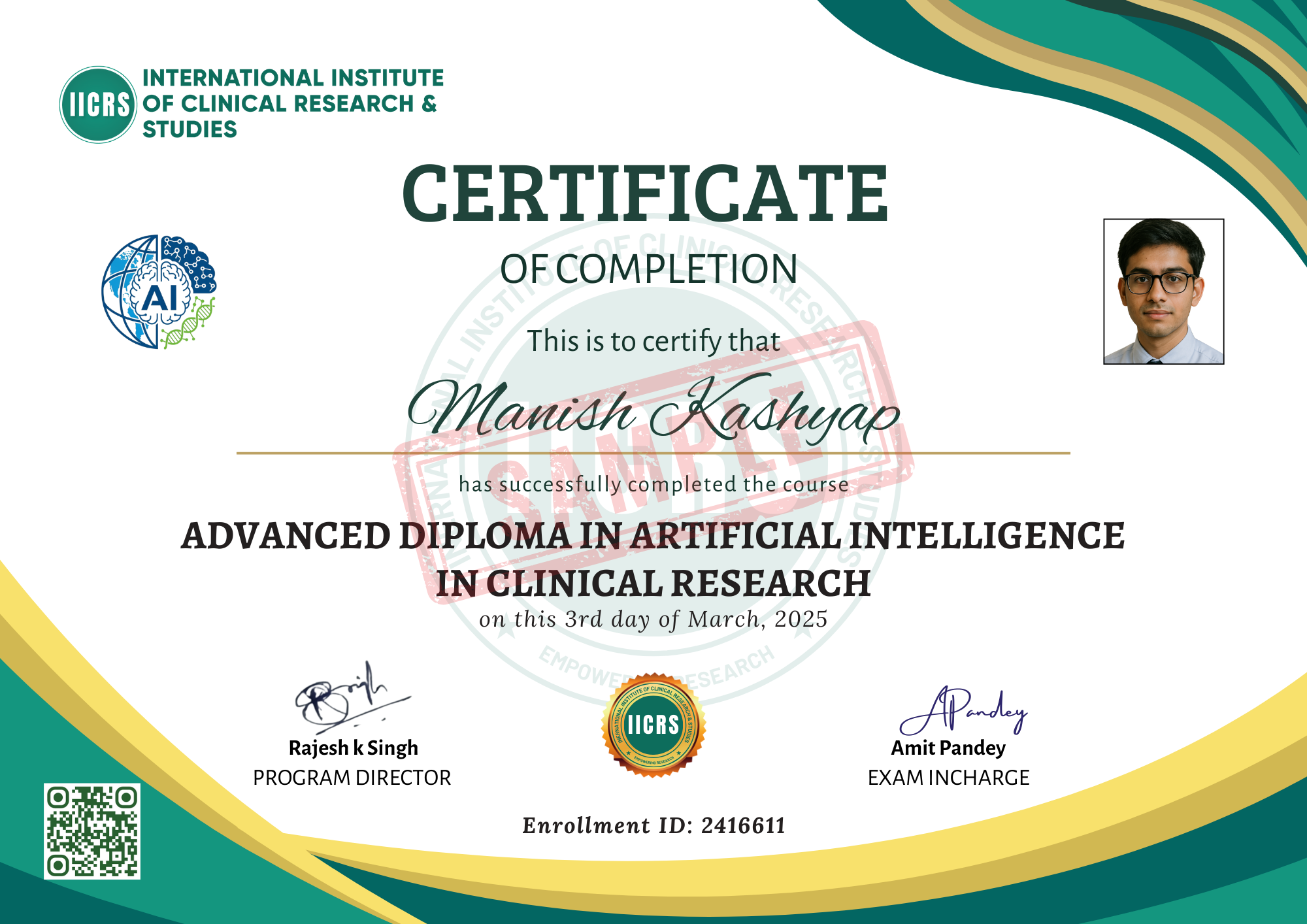
Upon successfully completing the program, you will be awarded an Advanced Diploma in Pharmacovigilance & Clinical Research, an Advanced Diploma in AI in Clinical Research, an ICH-GCP Certificate, and an international internship certificate from a USA-based company, all of which are highly valued by employers.
Q. Is there any free module in the course?
Yes, our Pharmacovigilance course includes several valuable free add-on modules. These include training in Clinical Research, the use of AI in Clinical Research, and a dedicated pre-placement training module designed to prepare you for job interviews and career success.
Q. What is the purpose of the ICH-GCP Certificate?
The ICH-GCP (International Council for Harmonisation - Good Clinical Practice) Certificate is a globally recognized credential. It validates your knowledge of international ethical and scientific quality standards for designing, conducting, and reporting clinical trials, making you a more qualified candidate for jobs in USA, Europe, and India.
Q. How is the course delivered?
The course is delivered through a flexible and interactive e-learning platform. It combines live virtual sessions led by industry experts, and a 24/7 AI bot for instant doubt resolution. This blend of real-time interaction and on-demand support makes our online course highly effective for all learners.
Q. What is the role of the AI bot in the course?
Our 24/7 AI bot serves as your personal study assistant. It's an innovative tool designed to help you with instant doubt resolution, allowing you to get answers to your queries and clear concepts at any time, which significantly enhances the learning experience and ensures continuous progress.
Q. Can I see a demo of the course content?
Yes, you can easily request a detailed brochure or book a free counseling session. During this session, our counselors will provide a comprehensive overview of the curriculum, program structure, and learning materials, allowing you to see how the IICRS Pharmacovigilance course will prepare you for a successful career in drug safety.
Q. What kind of placement support does IICRS offer?
IICRS provides comprehensive 100% placement support to help graduates secure jobs in the Pharmacovigilance industry. This includes specialized pre-placement training, resume writing, mock interviews, and access to an extensive network of hiring partners in India, Europe, and the USA. Our goal is to bridge the gap between education and a successful career.
Q. What companies hire IICRS graduates?
IICRS graduates are hired by top pharmaceutical companies, healthcare providers, and leading Contract Research Organizations (CROs). Our alumni work at globally recognized firms like Cognizant, IQVIA, ICON, and TCS, which have a strong presence in the USA, Europe, and India, demonstrating the program's industry relevance.
Q. What is pre-placement training?
Pre-placement training is a key part of our course designed to prepare you for job interviews and the professional world. This module focuses on essential soft skills, mock interviews, communication skills, and resume building, ensuring you present yourself as a confident and competent candidate to potential employers.
Q. How does the IICRS course help with getting a job after graduation?
The IICRS course is designed for maximum employability. By integrating AI in Pharmacovigilance, providing training on industry software (like Oracle Argus), offering a USA-based international internship, and delivering dedicated placement support, the program equips you with the in-demand skills and experience needed to secure a Pharmacovigilance job in India or abroad.
Q. Is an international internship necessary for a career in PV?
While not always mandatory, an international internship certificate from a USA-based company is a major competitive advantage. It demonstrates your ability to work on global projects and gives you practical, real-world experience, making you a highly attractive candidate for international jobs in Europe, the USA, and other key markets.
Q. What is a "live project"?
A "live project" is a hands-on, simulated exercise that uses real-world scenarios and data. It allows you to apply theoretical knowledge in a practical setting, from case processing to aggregate reporting. This experience helps you build confidence and provides a strong talking point during interviews, showcasing your practical skills.
Q. How does IICRS support career growth for experienced professionals?
The IICRS Advanced Diploma helps experienced professionals transition into the fast-growing AI in Clinical Research and Pharmacovigilance sectors. By focusing on emerging technologies, regulatory standards (like ICH-GCP), and advanced drug safety concepts, the course helps you upgrade your skills to take on leadership or specialized roles.
Q. Does the course include training on industry-standard software?
Yes, a key component of the IICRS curriculum is training on industry-standard drug safety and pharmacovigilance software, including Oracle Argus and ArisGlobal. This hands-on experience is crucial for gaining employment, as most pharma companies and CROs use these systems for adverse event reporting and case processing.
Q. What is the role of the ICH-GCP certificate in a job search?
The ICH-GCP Certificate is a globally recognized standard for Clinical Research. It demonstrates your understanding of the ethical and scientific guidelines for conducting clinical trials. This certificate is highly valued by employers, especially for roles that involve drug safety data from clinical trials.
Q. What is the cost of the international internship certificate?
The cost of the international internship certificate is an integral part of the course fees, ensuring that our graduates receive a comprehensive package without hidden costs. Our program includes this valuable credential to enhance your profile and prepare you for the competitive global Pharmacovigilance job market.
Q. What is a career in Pharmacovigilance?
A career in Pharmacovigilance is the science of monitoring the safety of medicines. Professionals in this field collect, analyze, and assess data from adverse drug reactions to ensure medications are safe for patients. It's a critical role that combines science, medicine, and regulation to protect public health.
Q. What are the entry-level jobs in Pharmacovigilance?
Common entry-level jobs in Pharmacovigilance include Drug Safety Associate, Drug Safety Executive, and Case Processor. These roles primarily focus on receiving, documenting, and processing Adverse Event reports. Our course prepares you for these roles and sets a foundation for career growth.
Q. What is the average starting salary for a Pharmacovigilance professional in India?
The average starting salary for an entry-level Drug Safety Associate in India ranges from ₹3.5 to ₹5 lakhs per annum. This can vary based on the company and city. With the IICRS Advanced Diploma, graduates are well-equipped to secure competitive offers in this in-demand field.
Q. How much can a Pharmacovigilance professional earn with experience?
With 3-5 years of experience, a Pharmacovigilance professional can earn between ₹6 to ₹10 lakhs per annum in India. Senior roles and specialized positions, such as Pharmacovigilance Manager or Signal Detection Specialist, can offer salaries of over ₹20 lakhs per annum. Salaries are even higher in the USA and Europe.
Q. What are the career growth opportunities in Pharmacovigilance?
A career in Pharmacovigilance offers a clear growth path. You can progress from a Drug Safety Associate to a Senior Safety Associate, a Drug Safety Scientist, or a Pharmacovigilance Manager. You can also specialize in areas like Signal Detection, Aggregate Reporting, or Medical Writing, leading to highly specialized and well-compensated roles.
Q. What skills are required for a job in Pharmacovigilance?
Key skills for a Pharmacovigilance job include a strong understanding of drug safety regulations, medical terminology, and attention to detail. Technical skills in case processing and safety databases (like Oracle Argus) are crucial. The IICRS course also emphasizes communication, analytical thinking, and the use of AI tools.
Q. Is a Pharmacovigilance course required to get a job?
While a background in life sciences is essential, a specialized Pharmacovigilance course like the one from IICRS is highly recommended. It provides the specific skills and certifications (e.g., ICH-GCP, AI training) that employers are actively looking for, significantly improving your job prospects in this specialized industry.
Q. What is the role of a Clinical Data Manager vs a Pharmacovigilance Professional?
A Clinical Data Manager focuses on managing data from clinical trials for regulatory submission. A Pharmacovigilance Professional specializes in the safety data of a drug, specifically adverse event reporting and analysis. While both work with clinical data, their roles are distinct, with Pharmacovigilance being a specialized branch of Clinical Research.
Q. Which background is best for a Pharmacovigilance career?
The best background for a Pharmacovigilance career is a degree in Pharmacy, Medicine (MBBS, BDS), Nursing, or Life Sciences (e.g., B.Sc., M.Sc. in Biotechnology). These fields provide the foundational knowledge of pharmacology and human biology necessary to understand drug safety and adverse drug reactions.
Q. What is the scope of a career in Pharmacovigilance?
The scope of Pharmacovigilance is vast and growing globally. With the increase in new drug approvals and stricter regulatory standards, there is a high demand for skilled professionals in India, USA, Europe, and the Middle East. The integration of AI and big data is further expanding the field, creating exciting new opportunities.
Q. What is a Drug Safety Associate?
A Drug Safety Associate is an entry-level professional in the Pharmacovigilance field. Their main responsibility is to perform case processing, which involves collecting, documenting, and entering information about adverse events from various sources into a safety database. They are crucial for maintaining accurate and timely drug safety reports.
Q. What is a Pharmacovigilance Scientist?
A Pharmacovigilance Scientist is a mid-to-senior-level role that goes beyond routine case processing. They are involved in more complex tasks like signal detection, risk-benefit analysis, and writing aggregate safety reports (e.g., PSURs, DSURs). Their role is more analytical and requires a deeper understanding of pharmacology and regulations.
Q. Are there jobs in Pharmacovigilance in clinical trials?
Yes, Pharmacovigilance is an essential part of clinical trials. Professionals monitor and report any adverse events that occur during the trial. Their work ensures patient safety and provides critical data for the final regulatory submission, proving the drug's safety profile before it goes to market.
Q. What are the top companies in Pharmacovigilance?
Leading Pharmacovigilance companies include major pharmaceutical companies and large CROs with global operations. These include companies like Pfizer, Johnson & Johnson, IQVIA, ICON, and Cognizant. They operate across USA, Europe, and India, offering diverse job opportunities.
Q. How does the IICRS course address future industry trends?
The IICRS curriculum is specifically designed to be future-ready. It includes dedicated modules on AI in Pharmacovigilance, Machine Learning, and Generative AI, ensuring our graduates are well-versed in the latest technologies. Our globally-aligned curriculum prepares you for a successful career in the evolving drug safety industry.
Q. How does the IICRS curriculum align with the Pharmacovigilance job market in the USA?
Our curriculum is designed to meet the rigorous standards of the USA job market. It provides hands-on training with FDA-compliant software like Oracle Argus, a core requirement for most Pharmacovigilance jobs in the USA. This practical knowledge, combined with an ICH-GCP Certificate and a USA-based international internship, makes our graduates highly desirable to employers.
Q. Is the IICRS course recognized by employers in Europe?
Yes, our Advanced Diploma has a global standard curriculum aligned with both ICH and GVP (Good Pharmacovigilance Practice) modules, which are the cornerstone of European Union regulations. This ensures our graduates possess the foundational knowledge required for Pharmacovigilance jobs across Europe, particularly in major hubs like the UK and Germany.
Q. How does the IICRS training prepare professionals for the job market in the Middle East?
The Middle East, especially countries like the UAE and Saudi Arabia, is rapidly expanding its Pharma and Clinical Research sectors. Our course provides essential training on Good Vigilance Practices and Risk Management Plans (RMPs), which are key regulatory requirements in the region. This makes our graduates well-equipped for roles in the growing Middle Eastern market.
Q. What career opportunities exist for IICRS graduates in Africa?
The African clinical research market is experiencing significant growth, with rising demand for skilled professionals in drug safety. The IICRS program gives you the necessary skills to secure roles as a Drug Safety Associate or Clinical Research Coordinator in key hubs across Africa, contributing to vital clinical trials and public health initiatives.
Q. Does IICRS have trainers with international experience relevant to the global market?
Yes, our faculty consists of senior industry experts with extensive experience from leading pharma companies and CROs in Europe, the USA, and India. Their global exposure ensures the training is not just theoretical but grounded in real-world practices, making the content relevant for international Pharmacovigilance jobs.
Q. How does the international internship help me get a job in the USA or Europe?
The international internship certificate from a USA-based company is a powerful credential on your resume. It demonstrates practical, real-world experience and a familiarity with global regulatory standards, giving you a significant competitive advantage over other candidates when applying for a Pharmacovigilance job in the USA and Europe.
Q. What specific AI skills does IICRS teach that are valuable in the global Pharmacovigilance market?
We train on the use of AI for signal detection, natural language processing (NLP) for text analysis, and Big Data analytics to process adverse event reports. These advanced skills are highly sought after by pharma companies worldwide, particularly in North America and Europe, to improve efficiency and accuracy in drug safety operations.
Q. Is the IICRS diploma recognized for jobs in Africa and the Middle East?
Yes, the IICRS Advanced Diploma is a globally recognized professional qualification. Its comprehensive curriculum, which aligns with ICH and GVP guidelines, and its focus on practical skills, make it highly valuable to employers across Africa and the Middle East, where the Pharmacovigilance industry is expanding.
Q. How does IICRS ensure its curriculum stays up-to-date with global regulatory changes?
Our curriculum is continuously reviewed and updated in collaboration with our network of global industry experts. This ensures that our course content always reflects the latest regulatory guidelines from the FDA (USA) and EMA (Europe) and remains current with the evolving landscape of Pharmacovigilance and Clinical Research.
Q. How does IICRS training give me an edge over local candidates in the USA, Europe, and India?
Our program provides a unique blend of core Pharmacovigilance knowledge, AI in Clinical Research, and hands-on software training that is not commonly found in a single course. This, combined with an international internship certificate and dedicated placement support, equips you with a superior skill set for the competitive global market.
Q. What is an Individual Case Safety Report (ICSR)?
An Individual Case Safety Report (ICSR) is a document containing the details of a single reported adverse event from a patient. It includes information such as the patient's details, the suspected drug, the reported adverse event, and the reporter's information. ICSRs are the building blocks of a Pharmacovigilance system.
Q. How important is a good resume for a PV job?
A good resume is crucial for a Pharmacovigilance job. It should highlight your relevant educational background, technical skills (e.g., Oracle Argus), certifications (ICH-GCP), and any practical experience gained from live projects or internships. An effective resume is your first opportunity to impress a recruiter and land an interview.
Q. What is the difference between an Adverse Event (AE) and an Adverse Drug Reaction (ADR)?
An Adverse Event (AE) is any unwanted medical occurrence that happens during drug treatment, which may or may not be related to the drug. An Adverse Drug Reaction (ADR) is an Adverse Event where a causal relationship with the drug is suspected. All ADRs are AEs, but not all AEs are ADRs.
Q. What is a MedDRA certification?
MedDRA (Medical Dictionary for Regulatory Activities) is a standardized medical terminology used to code clinical information for regulatory authorities. While there isn't a formal "MedDRA certification" from the organization, proficiency in MedDRA coding is a highly valuable skill for Pharmacovigilance professionals, and it is a key module in our curriculum.
Q. What is Oracle Argus Safety?
Oracle Argus Safety is a widely used drug safety database software for managing and processing adverse event reports. It is the industry standard for handling ICSRs and submitting them to regulatory bodies like the FDA and EMA. Our course includes hands-on training with this essential tool.
Q. What is a Clinical Research Coordinator (CRC)?
A Clinical Research Coordinator (CRC) is a professional who manages the day-to-day operations of a clinical trial at a specific site. Their responsibilities include patient recruitment, data collection, and ensuring compliance with the trial protocol. While they interact with PV professionals, their role is focused on the clinical site's operations.
Q. How is AI used in Pharmacovigilance?
AI in Pharmacovigilance is used to automate repetitive tasks like adverse event case intake and data entry. It also leverages Machine Learning (ML) to analyze vast datasets for signal detection and to identify emerging safety risks faster than manual methods. This technology improves efficiency and accuracy, which is crucial for drug safety in Europe, the USA, and India.
Q. What is the role of Generative AI (e.g., ChatGPT, Google Gemini) in Pharmacovigilance?
Generative AI is transforming Pharmacovigilance by assisting with narrative writing for ICSRs, summarizing complex safety reports, and drafting routine regulatory documents. By automating the creation of these documents, it significantly reduces manual effort, allowing professionals to focus on more critical tasks like signal analysis and risk management.
Q. What are the major trends in the Pharmacovigilance industry?
The major trends in the Pharmacovigilance industry include the increasing use of AI and Big Data analytics for proactive drug safety monitoring. Other key trends are the utilization of Real-World Evidence (RWE), the growth of personalized medicine, and the global push for harmonized regulatory standards to improve safety reporting worldwide.
Q. What is Real-World Evidence (RWE)?
Real-World Evidence (RWE) is clinical evidence about the usage and potential benefits or risks of a medical product derived from the analysis of real-world data (RWD). Sources of RWD include electronic health records (EHRs), patient registries, and data from wearable devices. RWE is increasingly used to supplement traditional clinical trial data.
Q. How are regulatory bodies like the FDA and EMA adapting to new technologies in PV?
Regulatory bodies like the FDA (USA) and the EMA (Europe) are actively embracing new technologies like AI and Big Data. They are issuing guidance on the use of these tools for Pharmacovigilance, and they are building systems to accommodate automated data submissions, which improves the efficiency and speed of drug safety oversight globally.
Q. What is the future outlook for the Pharmacovigilance industry?
The future of the Pharmacovigilance industry is very promising, with a projected growth rate of over 9% annually. This growth is driven by the development of new drugs, stricter regulations, and the increasing use of technology. The demand for skilled Pharmacovigilance professionals will remain high across India, the USA, and Europe.
Q. What is signal detection?
Signal detection is a critical Pharmacovigilance process that involves analyzing large datasets to identify new or known safety risks associated with a drug. The goal is to discover potential adverse drug reactions that were not identified during clinical trials. AI and data analytics are increasingly used to make this process more efficient and accurate.
Q. What is the importance of global regulatory harmonization?
Global regulatory harmonization simplifies the process of drug safety reporting for pharmaceutical companies by aligning regulations across different countries. This consistency, advocated by bodies like ICH, streamlines the submission of adverse event data to regulatory authorities like the FDA and the EMA, ultimately improving patient safety worldwide.
Q. How does Pharmacovigilance contribute to public health?
Pharmacovigilance is the backbone of public health by ensuring the safety of all medications on the market. By continuously monitoring and analyzing adverse drug reactions, PV professionals can identify and manage risks, preventing harm to patients and ensuring that only safe and effective drugs are available to the public.
Q. What is the definition of Pharmacovigilance?
Pharmacovigilance (PV) is the scientific discipline concerned with the detection, assessment, understanding, and prevention of adverse drug reactions and other drug-related problems. It is a critical component of drug safety that operates throughout the entire drug development lifecycle, from clinical trials to post-marketing.
Q. What is Clinical Research?
Clinical Research is a branch of healthcare science that evaluates the safety and efficacy of medical products, such as drugs, devices, and treatments, for human use. It is a highly regulated field that follows strict protocols and guidelines, such as ICH-GCP, to ensure the integrity of the data and the well-being of the patients.
Q. How does Pharmacovigilance relate to Clinical Research?
Pharmacovigilance is a key function within Clinical Research. During a clinical trial, PV professionals are responsible for monitoring and reporting all adverse events and serious adverse events (SAEs) that occur in trial participants. Their work ensures patient safety and provides crucial data for the final regulatory submission.
Q. What is a Clinical Trial?
A clinical trial is a research study in which human volunteers receive a new medical product or treatment to determine its safety and effectiveness. These trials are conducted in a series of phases and are essential for gathering the scientific evidence required for regulatory approval and market access.
Q. What is an Adverse Event (AE)?
An Adverse Event (AE) is any undesirable medical occurrence in a patient who is administered a pharmaceutical product. It does not necessarily have a causal relationship with the drug, but it must be documented and reported to the Pharmacovigilance team for assessment.
Q. What is an Adverse Drug Reaction (ADR)?
An Adverse Drug Reaction (ADR) is an Adverse Event where a causal relationship between the drug and the event is suspected. ADRs are considered a harmful and unintended response to a medication and are a primary focus of Pharmacovigilance.
Q. What is a Serious Adverse Event (SAE)?
A Serious Adverse Event (SAE) is an Adverse Event that results in an outcome such as death, a life-threatening condition, hospitalization, a significant disability, or a birth defect. Due to their seriousness, SAEs require immediate reporting to regulatory authorities like the FDA and EMA.
Q. What is an Individual Case Safety Report (ICSR)?
An Individual Case Safety Report (ICSR) is a standardized report containing all the details of a single adverse event or adverse drug reaction. It is a fundamental component of Pharmacovigilance that is used to document and submit safety data to regulatory authorities.
Q. What is Case Processing?
Case processing is the series of steps involved in handling an adverse event report from its initial receipt to its entry into a Pharmacovigilance database. This process includes data collection, entry, validation, MedDRA coding, and quality control to ensure data integrity.
Q. What is MedDRA?
MedDRA (Medical Dictionary for Regulatory Activities) is a globally accepted medical terminology used by the Pharmacovigilance industry. It provides a standardized set of terms to classify and report medical information from all phases of drug development, ensuring consistency in data collection and analysis.
Q. Why is MedDRA important in Pharmacovigilance?
MedDRA is crucial for Pharmacovigilance because it standardizes the way adverse event data is coded and communicated. This allows for consistent data analysis and facilitates the exchange of safety information between different regulatory authorities and companies globally.
Q. What is an aggregate report?
An aggregate report is a comprehensive summary of all safety data collected for a drug over a specific period. Unlike a single-case report, it provides an overall safety profile of the drug, which is essential for ongoing risk-benefit assessment and regulatory compliance.
Q. What is a PSUR?
A PSUR (Periodic Safety Update Report) is an aggregate report that provides an updated safety profile of a drug to regulatory authorities. It is submitted periodically to summarize a drug's benefit-risk balance and is a key requirement for post-marketing surveillance.
Q. What is a DSUR?
A DSUR (Development Safety Update Report) is an annual aggregate report that provides an updated safety profile of an investigational drug during clinical trials. It is submitted to regulatory authorities to inform them of all new safety information learned about the drug since the last report.
Q. What is Signal Detection in Pharmacovigilance?
Signal detection is the process of identifying potential safety signals, which are new and unusual adverse drug reactions, by analyzing large volumes of safety data. Our course covers the methods used to detect these signals, including advanced AI and statistical analysis.
Q. How is a causality assessment performed?
Causality assessment is the process of determining the likelihood that a drug caused an adverse event. This is done by reviewing all available data, including the event's timeline, the patient's medical history, and prior knowledge of the drug. Algorithms and expert judgment are used to establish a causal link.
Q. What is Risk Management in Pharmacovigilance?
Risk management involves identifying, assessing, and minimizing the risks associated with a medicinal product throughout its lifecycle. This process begins in clinical trials and continues after a drug is approved, with the goal of ensuring that the benefits of the drug outweigh its risks.
Q. What is an RMP?
An RMP (Risk Management Plan) is a detailed document that outlines a company's strategy for managing a product's known and potential risks. It includes a Pharmacovigilance plan to monitor risks and a risk minimization plan to reduce the frequency and severity of adverse events.
Q. What are the different phases of a clinical trial?
Clinical trials are typically conducted in four phases. Phase I tests for safety in a small group of healthy volunteers. Phase II tests for efficacy in a larger group of patients. Phase III compares the new drug to an existing treatment or placebo in a large, diverse group. Phase IV is post-marketing surveillance.
Q. What is the role of a PV professional in Phase I trials?
In Phase I trials, a Pharmacovigilance professional's role is to meticulously monitor the small group of healthy volunteers for any adverse events. The focus is on safety and tolerability. All adverse events are immediately documented and reported to the regulatory authorities for assessment.
Q. What is the role of a PV professional in Phase II and III trials?
In Phase II and III trials, PV professionals handle a much larger volume of safety data. They are responsible for processing and managing all adverse events, especially serious adverse events (SAEs), and ensuring that all reports are submitted to regulatory authorities within the required timelines.
Q. What is Phase IV of a clinical trial?
Phase IV is also known as post-marketing surveillance. It is a continuous process of monitoring the safety and effectiveness of a drug after it has been approved for public use. Pharmacovigilance professionals collect adverse event data from patients and healthcare professionals to identify long-term or rare risks.
Q. What is ICH-GCP?
ICH-GCP stands for International Council for Harmonisation - Good Clinical Practice. It is a set of internationally recognized ethical and scientific standards for designing, conducting, recording, and reporting clinical trials involving human participants. Compliance with ICH-GCP is mandatory for all professionals in the field.
Q. What is a SUSAR?
A SUSAR (Suspected Unexpected Serious Adverse Reaction) is an adverse reaction that is both serious and not previously listed in the known safety profile of the drug. The discovery of a SUSAR requires expedited reporting to regulatory authorities.
Q. What is the difference between a spontaneous report and a solicited report?
A spontaneous report is an unsolicited report of an adverse event from a patient or healthcare professional. A solicited report is actively sought out by the sponsor, such as through a patient support program, a survey, or a clinical trial.
Q. What is the role of pharmacovigilance in patient safety?
Pharmacovigilance is the cornerstone of patient safety. By identifying and managing potential risks associated with medicinal products, it ensures that the benefits of a drug outweigh its risks. This continuous monitoring process is vital for protecting public health.
Q. What are some challenges in Pharmacovigilance?
Some key challenges in Pharmacovigilance include the underreporting of adverse events, the need to process vast amounts of Big Data, and the complexities of staying compliant with ever-evolving global regulations. The IICRS course provides training on how to overcome these challenges using modern tools and techniques.
Q. How does AI help in Signal Detection?
AI helps in signal detection by analyzing massive datasets, including those from social media and electronic health records, to find patterns that humans might miss. It can rapidly identify potential safety signals by detecting unusual trends or clusters of adverse events more efficiently and accurately.
Q. What is the role of NLP in Pharmacovigilance?
NLP (Natural Language Processing) is a type of AI that is used to extract key information from unstructured data sources, such as free-text fields in ICSRs and clinical narratives. This allows Pharmacovigilance systems to automatically identify and categorize relevant information, significantly speeding up the case processing workflow.
Q. What is the significance of the Pharmacovigilance Quality Management System (QMS)?
A QMS ensures that all Pharmacovigilance activities are performed consistently and are compliant with regulatory guidelines like GVP. It provides a framework for quality control, process documentation, and continuous improvement, which is essential for maintaining a high standard of drug safety.
Q. What are the key elements of a valid ICSR?
The four key elements of a valid ICSR are an identifiable patient, an identifiable reporter, a suspected drug, and a suspected adverse event. If any of these four elements are missing from a report, it cannot be considered a valid ICSR.
Q. How is a case report generated from a source document?
A case report is generated from a source document (such as a medical chart or a patient report) through a process called case processing. The data is extracted from the source document, entered into a Pharmacovigilance database, and reviewed by a PV professional to ensure accuracy and completeness before it is submitted.
Q. What is the role of a case narrative in a safety report?
A case narrative is a concise summary of all the information from a case report. It tells the story of the adverse event, including the patient's history, the treatment received, and the outcome. AI tools are increasingly used to generate these narratives, which are crucial for a reviewer to understand the report.
Q. How is case follow-up performed in Pharmacovigilance?
Case follow-up is performed to obtain additional information for an incomplete or unclear adverse event report. Pharmacovigilance professionals contact the reporter (e.g., a healthcare professional or a patient) to collect missing details, such as test results or a detailed description of the event.
Q. What are expedited reporting requirements?
Expedited reporting refers to the requirement to submit certain adverse event reports to regulatory authorities within a short timeframe, usually within 15 days of the report becoming a valid ICSR. This applies to all Serious Adverse Events (SAEs) that are also suspected of being related to the drug.
Q. What is an E2B file?
An E2B file is a standard electronic format for transmitting ICSRs between companies and regulatory authorities. It ensures that the data is structured consistently, allowing for the rapid and automated exchange of drug safety information. Our course provides training on this vital format.
Q. How does the EudraVigilance database work?
The EudraVigilance database is a centralized system for managing and analyzing information on suspected adverse reactions to medicines in the European Union (EU). It is used by the European Medicines Agency (EMA) to monitor the safety profile of drugs and identify potential safety signals.
Q. What is the role of the FDA's FAERS database?
The FDA's FAERS (Adverse Event Reporting System) database is a national system in the USA that stores and manages adverse event reports. The FDA uses this database to monitor the safety profile of a drug throughout its lifecycle and to identify potential safety issues.
Q. What are the different types of aggregate reports?
The main types of aggregate reports are the PSUR (Periodic Safety Update Report), the DSUR (Development Safety Update Report), and the PBRER (Periodic Benefit-Risk Evaluation Report). These reports summarize a drug's safety data and are submitted periodically to regulatory authorities.
Q. What is a Signal Validation Report?
A Signal Validation Report is a document that is prepared after a potential safety signal has been detected. It provides a detailed analysis of all the available data to determine if the signal is genuine and requires further investigation or regulatory action.
Q. What is a PBRER?
A PBRER (Periodic Benefit-Risk Evaluation Report) is a type of aggregate report that provides a comprehensive evaluation of a drug's overall benefit-risk profile. It is a key tool for communicating a drug's safety profile to regulatory authorities in Europe and other global regions.
Q. What is the purpose of risk minimization measures?
Risk minimization measures are a set of actions taken to reduce the frequency and severity of adverse events. These measures can include things like issuing a special safety warning to healthcare professionals, patient education programs, or implementing a controlled-access program for a drug with significant risks.
Q. What is Pharmacoepidemiology?
Pharmacoepidemiology is the study of the use and effects of drugs in large populations. It applies the principles of epidemiology to the field of Pharmacovigilance to identify and analyze adverse drug reactions and other drug-related health outcomes.
Q. How is Pharmacoepidemiology used in Pharmacovigilance?
Pharmacoepidemiology provides a scientific basis for assessing drug safety and risk. It is used to design and conduct observational studies, analyze large datasets to identify safety signals, and quantify the risk of a specific adverse event in a real-world setting.
Q. What is the role of a Pharmacovigilance Auditor?
A Pharmacovigilance Auditor is a professional who evaluates a company's Pharmacovigilance system to ensure it is compliant with regulatory guidelines. They conduct thorough reviews of a company's processes and records to confirm the integrity of its drug safety operations.
Q. What is a Pharmacovigilance Inspection?
A Pharmacovigilance Inspection is an official visit from a regulatory authority (such as the FDA or EMA) to a company to verify that its PV system and activities are compliant with the regulations. A successful inspection is critical for a company to maintain its license to market a drug.
Q. What is a safety database?
A safety database is a centralized electronic system used to store, manage, and analyze all of a company's adverse event reports. These databases are essential for performing key Pharmacovigilance activities, such as case processing, aggregate reporting, and signal detection.
Q. What are some examples of safety databases used in the industry?
The most widely used safety databases in the industry are Oracle Argus Safety and ArisGlobal LifeSphere Safety. Our course provides hands-on training with these systems to ensure you have the practical skills that are most valued by employers in USA, Europe, and India.
Q. How does AI automate case intake?
AI automates case intake by using intelligent tools to extract data from various sources (emails, faxes, web forms) and automatically populate the fields in a safety database. This automation reduces manual effort, improves data accuracy, and significantly speeds up the Pharmacovigilance workflow.
Q. How is AI used for data extraction and coding?
AI uses advanced algorithms and NLP to automatically extract key information from unstructured text, such as the patient narrative in an ICSR. It can then automatically code this information using a standardized terminology like MedDRA, which streamlines the entire case processing workflow.
Q. How can AI improve the accuracy of a causality assessment?
AI can improve the accuracy of a causality assessment by analyzing millions of data points from both clinical trials and real-world data. It can identify subtle patterns and correlations that may not be apparent to a human reviewer, providing a more robust and evidence-based assessment.
Q. How does AI aid in compliance monitoring?
AI can aid in compliance monitoring by automatically tracking and flagging all safety reports that are due for submission to a regulatory authority. It can monitor timelines and alert the Pharmacovigilance team to any potential delays, helping to ensure that a company remains compliant with all global regulations.
Q. What is the role of a PV professional in a clinical trial?
A PV professional in a clinical trial is responsible for all adverse event reporting and management. They work closely with the clinical team to ensure that all safety events are meticulously documented, processed, and submitted to the regulatory authorities in a timely manner, with a focus on patient safety.
Q. How are AEs and SAEs handled in a clinical trial?
In a clinical trial, all AEs and SAEs are meticulously documented on a standardized form. SAEs are considered critical and are immediately reported to the sponsor and regulatory authorities, while AEs are reported periodically. Our curriculum provides training on these critical reporting procedures.
Q. What are the key regulatory bodies in Pharmacovigilance?
The key regulatory bodies in Pharmacovigilance include the FDA (Food and Drug Administration) in the USA, the EMA (European Medicines Agency) in Europe, and the CDSCO in India. They are responsible for setting the regulatory guidelines and overseeing the safety of all drugs on the market.
Q. What is the importance of SOPs (Standard Operating Procedures) in PV?
SOPs are essential in Pharmacovigilance because they provide a standardized, step-by-step guide for all processes, from case processing to aggregate reporting. Following SOPs ensures consistency and quality, which is crucial for maintaining regulatory compliance and data integrity.
Q. What is the difference between an Expected and Unexpected AE?
An Expected AE is a previously identified adverse event that is listed in the drug's product information. An Unexpected AE is a new or unlisted adverse event that is considered a potential new safety signal and requires further investigation.
Q. What is the role of a Medical Reviewer?
A Medical Reviewer is a healthcare professional (usually a physician) who reviews an adverse event report to assess its medical seriousness and confirm the causality assessment. They play a key role in the final approval of safety reports before they are submitted to the regulatory authorities.
Q. How does Pharmacovigilance work for medical devices and vaccines?
Pharmacovigilance also applies to medical devices and vaccines. For devices, the process is called Vigilance, and for vaccines, it is known as Vaccine Vigilance. While the principles are similar, there are specific regulatory requirements and reporting standards for each.
Q. What is the role of a Medical Coder in a PV team?
A Medical Coder uses standardized medical terminology like MedDRA to code all medical information from an adverse event report. Their role is crucial for ensuring that the data is consistent and can be correctly analyzed by a Pharmacovigilance database.
Q. Is safety data managed from social media and other digital sources?
With the rise of digital platforms, Pharmacovigilance professionals are increasingly monitoring social media, forums, and other digital sources for potential adverse event reports. AI tools, particularly NLP, are used to screen this vast amount of unstructured data and extract relevant safety information.